Menu
Close
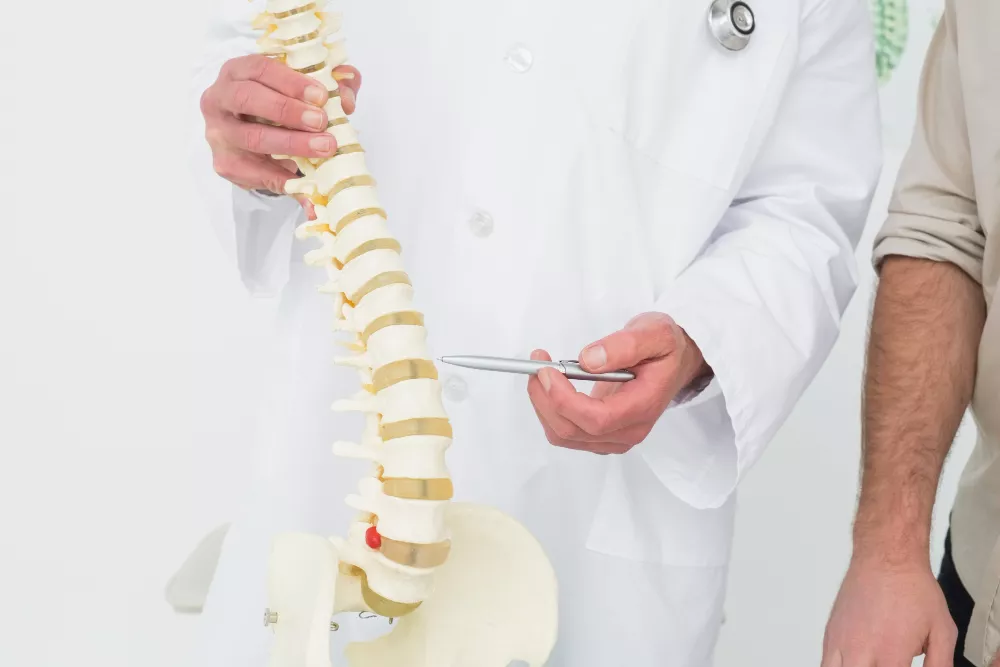
A slipped disc is one of the most common causes of back pain, neck pain and leg pain. The spine has soft, cushion like discs between the bones that act as shock absorbers. When the outer layer of a disc becomes weak or tears, the soft inner part can bulge out and press on a nearby nerve. This is called a slipped disc, herniated disc or disc prolapse. It is most often seen in the lower back and neck, and is common in people between the ages of 30 and 50.
With long sitting hours, heavy lifting and less exercise, more young people in Mumbai are facing slipped disc problems today. The good news is that most people get better with the right non surgical care. But if the pain is severe, lasts for weeks, or causes numbness and weakness in the legs or arms, proper treatment is needed. At SpineArc, Dr. Tanmay Avhad treats slipped disc with a step by step approach, from medicines and injections to endoscopic disc surgery through a small 8mm cut when truly needed.
The symptoms of a slipped disc depend on where the disc is and which nerve is being pressed. Common symptoms include:


A slipped disc can happen suddenly or slowly over time. Some of the most common causes are:
To treat a slipped disc the right way, the exact level and nerve involved must be found first. At SpineArc, diagnosis and treatment follow a step by step approach:
Some people are more likely to get a slipped disc. Knowing these factors can help you take early care:
Discs start losing water and strength after the age of 30.
Jobs that need lifting, pulling, bending or twisting increase the load on the discs.
Sitting for long hours puts constant pressure on the lower back discs.
Being overweight adds more stress to the discs in the lower back.
Smoking reduces the blood and oxygen supply to the discs, making them wear out faster.
Get the right diagnosis and advanced slipped disc treatment in Mumbai from Dr. Tanmay Avhad at 4 hospitals across the city. Available 6 days a week, book your consultation today.
Everything you need to know about slipped disc treatment in Mumbai, answered simply by Dr. Tanmay Avhad.
Yes. Many people with a slipped disc get better in a few weeks to a few months with medicines, physiotherapy and injections. Surgery is needed only when the pain does not improve or there is nerve weakness.
Surgery may be suggested if severe leg or arm pain continues even after proper treatment, if there is weakness in the leg or arm, or if there is loss of bladder or bowel control.
It is a modern surgery to remove the part of the disc pressing on the nerve. It is done through a small 8mm cut using a thin camera, with very little damage to muscles, so recovery is faster.
Most patients walk on the same day and go home within 24 to 36 hours. Many can return to desk work in a few weeks, based on their condition and the doctor’s advice.
It can happen in some cases. Correct lifting, good posture, regular exercise and weight control can lower the chance of it happening again.
You can call +91 79779 26003 or +91 99203 97922, send a WhatsApp message, or fill the form on this website. Our team will call you to confirm your time and hospital.
He consults at Gleneagles Hospital Parel, Aryan Multispeciality Hospital Kalachowki, Siddhachal Hospital Sion and Sushrut Hospital and Research Centre Chembur.
SpineArc is the spine practice of
Dr. Tanmay Avhad, a Gold Medalist Orthopaedic Spine Surgeon in Mumbai. The practice focuses on advanced, precise and minimally invasive spine care, from image-guided pain procedures to uniportal full endoscopic spine surgery, with the right treatment chosen for every patient.
Designed & Developed by DigiScrub
© SpineArc 2026 | All Rights Reserved