
Menu
Close
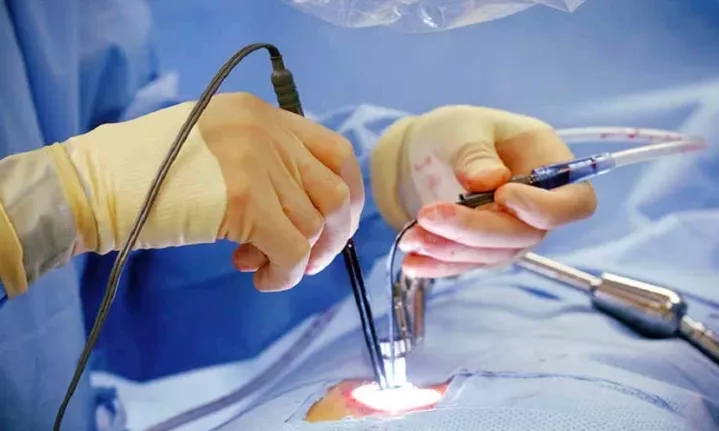
Endoscopic spine surgery is one of the most advanced and least invasive ways to treat spine problems today. In this surgery, a thin tube with a high definition camera, called an endoscope, is passed into the spine through a single small cut of about 8mm, less than 1 cm. The surgeon sees the nerves and the problem clearly on a screen with up to 25 times magnification and treats it directly, without cutting through the back muscles or removing much bone. This is why it is also called uniportal full endoscopic spine surgery.
Uniportal full endoscopic spine surgery is Dr. Tanmay Avhad’s main area of expertise. He completed a two year fellowship in Minimally Invasive and Full Endoscopic Spine Surgery and has contributed to research that improves these techniques, including a paper in the Asian Spine Journal on interlaminar endoscopic decompression and an award winning study on a new angled guide for transforaminal endoscopy. At SpineArc, his focus is on precise, targeted treatment of the problem while keeping the normal structures of the spine intact, so that patients have less pain after surgery and return to normal life faster.

Endoscopic spine surgery is performed to relieve pressure on the nerves and treat spine problems that do not improve with medicines, physiotherapy and injections. It is used for slipped disc and sciatica, lumbar and cervical spinal stenosis, foraminal stenosis, recurrent disc herniation, some cases of cervical myelopathy, and in selected patients for spine fusion and revision surgery. Because it causes very little damage to the muscles and bones, and is often done under local anaesthesia, it is a preferred option for elderly patients and those with diabetes, heart or lung problems. The goal is to remove only what is causing the problem, preserve normal anatomy and spine movement, and help patients recover with less pain, less blood loss and a shorter hospital stay.
The surgery is usually done under local anaesthesia with light sedation, or under general anaesthesia in some cases. Using a C-arm (live X-ray machine), the surgeon plans the exact path to the problem and makes a single cut of about 8mm. A thin working tube and the endoscope are passed through this cut, using the natural openings of the spine. Dr. Tanmay uses two main approaches. In the transforaminal approach, the endoscope enters from the side of the spine through a natural space called Kambin’s triangle to reach the disc and nerve exit area. In the interlaminar approach, it enters from the back through the natural window between two spine bones to reach the central spinal canal. Through the camera, the surgeon removes the slipped disc, bone spurs or thick ligament pressing on the nerve, using fine instruments, a high speed burr and a laser or radiofrequency energy source for precise work near the nerves. Constant water flow keeps the view clear, and real time neuromonitoring helps protect the nerves during surgery. The cut is closed with a single stitch or skin tape.
Most patients are able to walk within a few hours after endoscopic spine surgery and go home within 24 to 36 hours. Since the muscles are not cut, pain after surgery is much less than open surgery, and many patients feel relief from leg or arm pain right after the procedure. Patients can usually return to light daily activities and desk work within 1 to 2 weeks. Heavy lifting, strenuous exercise and sports are resumed gradually over 6 to 8 weeks, based on the doctor’s advice. A guided physiotherapy program helps strengthen the back and lower the chance of the problem coming back.
Get advanced uniportal full endoscopic spine surgery in Mumbai from Dr. Tanmay Avhad at 4 hospitals across the city. Available 6 days a week, book your consultation today.
Everything you need to know about endoscopic spine surgery in Mumbai, answered simply by Dr. Tanmay Avhad.
It is a minimally invasive spine surgery done through a single cut of about 8mm using a thin camera. The surgeon treats the problem directly with very little damage to muscles and bones.
Open surgery needs a bigger cut and moves or cuts the back muscles. Endoscopic surgery uses a tiny cut and natural spine openings, which means less pain, less blood loss, a shorter hospital stay and faster recovery.
Many endoscopic procedures are done under local anaesthesia with light sedation, which makes them safer for elderly patients and those with other health problems. Some cases need general anaesthesia.
It can treat slipped disc, sciatica, lumbar and cervical spinal stenosis, recurrent disc problems and, in selected patients, cervical myelopathy, fusion and revision cases.
Most patients walk within a few hours after surgery and go home within 24 to 36 hours.
You can call +91 79779 26003 or +91 99203 97922, send a WhatsApp message, or fill the form on this website. Our team will call you to confirm your time and hospital.
Dr. Tanmay consults at 6 hospitals in Mumbai:
SpineArc is the spine practice of
Dr. Tanmay Avhad, a Gold Medalist Orthopaedic Spine Surgeon in Mumbai. The practice focuses on advanced, precise and minimally invasive spine care, from image-guided pain procedures to uniportal full endoscopic spine surgery, with the right treatment chosen for every patient.
Designed & Developed by DigiScrub
© SpineArc 2026 | All Rights Reserved