Menu
Close
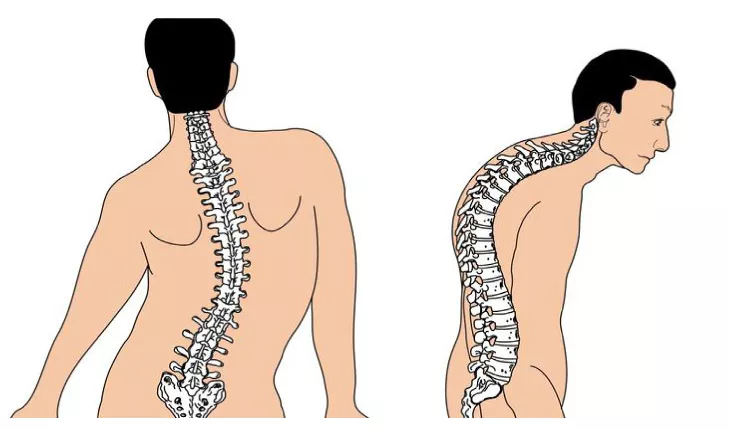
A healthy spine has natural curves and stays stable when we move. Spine deformity means the spine has developed an abnormal curve or shape, like a sideways bend (scoliosis), a forward hunch (kyphosis), or an imbalance that makes a person lean forward or to one side. Spine instability means the spine bones move more than they should, like when one bone slips over another (spondylolisthesis). Both problems can press on the nerves, change posture and cause back pain, leg pain and difficulty in standing or walking.
Spine deformity and instability can be present from childhood or develop later in life due to wear and tear, injury, infection, tumours or earlier spine surgery. In adults, it often comes along with spinal stenosis and nerve pressure. At SpineArc, Dr. Tanmay Avhad carefully studies the whole spine, not just the painful level, to understand alignment and stability. He then plans the right treatment, from non surgical care and injections to endoscopic and minimally invasive fusion, choosing larger surgery only when it is truly needed.
The symptoms of spine deformity and instability depend on the type and severity of the problem. Common symptoms include:


Spine deformity and instability can happen for many reasons. Some of the most common causes are:
To treat spine deformity and instability the right way, the full spine alignment and stability must be studied first. At SpineArc, diagnosis and treatment follow a step by step approach:
Some people are more likely to develop spine deformity or instability. Knowing these factors can help you take early care:
Disc and joint wear after 50 can lead to slipping or curving of the spine.
Degenerative spondylolisthesis and adult scoliosis are more common in women.
Weak bones can collapse and cause a forward hunch.
Scoliosis can run in families.
Fractures, infections, tumours or earlier spine surgery can weaken spine stability.
Get the right diagnosis and advanced spine deformity and instability treatment in Mumbai from Dr. Tanmay Avhad at 4 hospitals across the city. Available 6 days a week, book your consultation today.
Everything you need to know about spine deformity and instability treatment in Mumbai, answered simply by Dr. Tanmay Avhad.
Spine instability means the spine bones move more than normal, like when one bone slips over another. This can press on nerves and cause back and leg pain.
It is a condition where one spine bone slips forward over the bone below it. It is most common in the lower back and can cause back pain, leg pain and difficulty walking.
Yes. Many patients with mild deformity or instability do well with physiotherapy, medicines, injections and, in some cases, a brace. Surgery is needed when pain, nerve pressure or deformity keeps getting worse.
Not always. Some patients only need decompression to free the nerves. Fusion is advised when the slipped level is unstable and moves on bending X-rays.
Yes. In suitable patients, endoscopic or minimally invasive fusion like Endo TLIF or K-LIF can be done through small cuts, with less muscle damage, less blood loss and faster recovery than open surgery.
You can call +91 79779 26003 or +91 99203 97922, send a WhatsApp message, or fill the form on this website. Our team will call you to confirm your time and hospital.
Dr. Tanmay consults at 6 hospitals in Mumbai:
SpineArc is the spine practice of
Dr. Tanmay Avhad, a Gold Medalist Orthopaedic Spine Surgeon in Mumbai. The practice focuses on advanced, precise and minimally invasive spine care, from image-guided pain procedures to uniportal full endoscopic spine surgery, with the right treatment chosen for every patient.
Designed & Developed by DigiScrub
© SpineArc 2026 | All Rights Reserved