Menu
Close
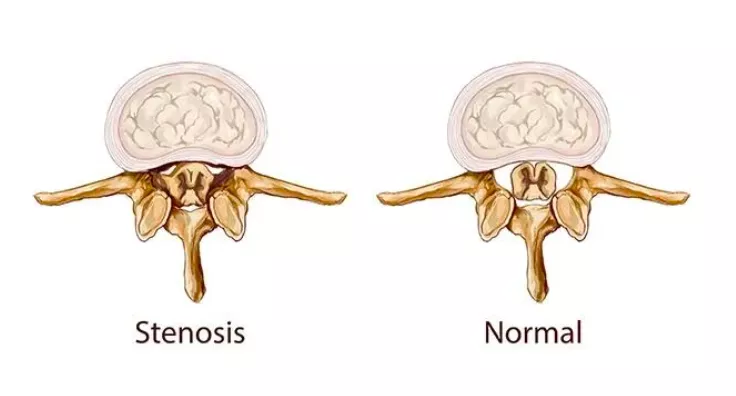
Spinal stenosis is a condition where the space inside the spine becomes narrow and starts pressing on the spinal cord or nerves. It happens most often in the lower back (lumbar stenosis) and the neck (cervical stenosis). It is one of the most common reasons for back and leg pain in people above the age of 50, and it is also one of the main reasons for spine surgery in older adults.
Spinal stenosis usually develops slowly over many years due to wear and tear of the spine. Many people first notice that they cannot walk as far as before, and their legs feel heavy, painful or numb after walking a short distance. Sitting or bending forward often gives relief. In Mumbai, many senior citizens accept this as a normal part of ageing, but it can be treated. At SpineArc, Dr. Tanmay Avhad treats spinal stenosis with a step by step approach, and for patients who need surgery, endoscopic decompression can often be done under local anaesthesia, which makes it a safer option for elderly patients and those with diabetes or heart problems.
The symptoms of spinal stenosis depend on where the narrowing is and how much pressure is on the nerves. Common symptoms include:


Spinal stenosis can happen due to many changes in the spine. Some of the most common causes are:
To treat spinal stenosis the right way, the exact level and amount of narrowing must be found first. At SpineArc, diagnosis and treatment follow a step by step approach:
Some people are more likely to get spinal stenosis. Knowing these factors can help you take early care:
Spinal stenosis is most common after the age of 50.
Wear and tear of the spine joints leads to bone spurs and narrowing.
Old injuries, slipped discs or earlier spine surgery can raise the risk.
More weight adds pressure on the lower spine.
Years of lifting and bending can speed up spine wear.
Get the right diagnosis and advanced spinal stenosis treatment in Mumbai from Dr. Tanmay Avhad at 4 hospitals across the city. Available 6 days a week, book your consultation today.
Everything you need to know about spinal stenosis treatment in Mumbai, answered simply by Dr. Tanmay Avhad.
The most common symptom is pain, heaviness or numbness in the legs while walking or standing, which gets better when you sit down or bend forward.
Yes. Mild to moderate stenosis can often be managed with medicines, physiotherapy and image-guided injections. Surgery is suggested when walking becomes very limited or there is nerve weakness.
Endoscopic decompression is often done under local anaesthesia with a small cut and very little blood loss. This makes it a good option for elderly patients and those with diabetes, heart or lung problems, after a proper check.
Not always. Most patients only need decompression to free the nerves. Fusion is needed only when the spine is unstable, like in spondylolisthesis.
After endoscopic decompression, most patients walk on the same day and go home within 24 to 36 hours. Walking distance usually improves over the following weeks.
You can call +91 79779 26003 or +91 99203 97922, send a WhatsApp message, or fill the form on this website. Our team will call you to confirm your time and hospital.
Dr. Tanmay consults at 6 hospitals in Mumbai:
SpineArc is the spine practice of
Dr. Tanmay Avhad, a Gold Medalist Orthopaedic Spine Surgeon in Mumbai. The practice focuses on advanced, precise and minimally invasive spine care, from image-guided pain procedures to uniportal full endoscopic spine surgery, with the right treatment chosen for every patient.
Designed & Developed by DigiScrub
© SpineArc 2026 | All Rights Reserved