
Menu
Close
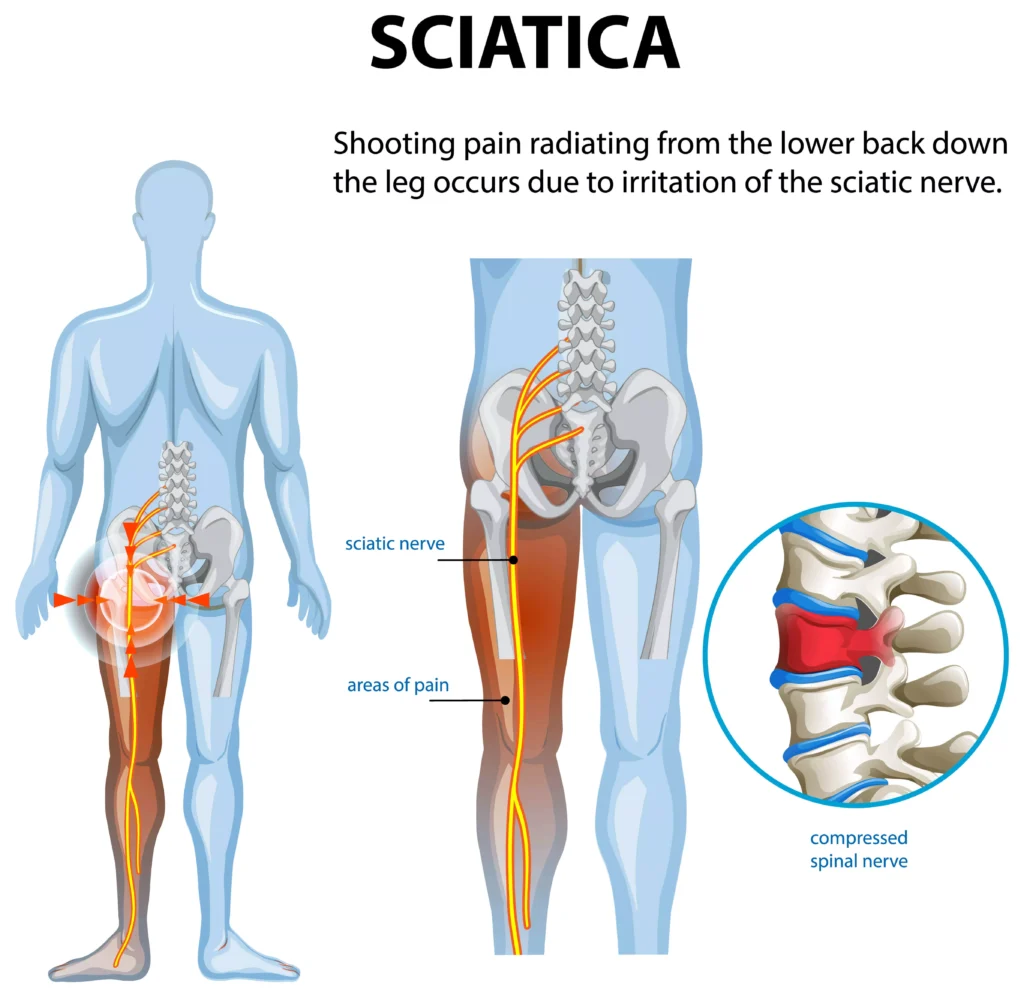
Sciatica is pain that starts in the lower back or buttock and travels down the back of the leg, sometimes all the way to the foot. It happens when the sciatic nerve, the longest nerve in the body, or the nerve roots that form it get pressed or irritated. Studies show that up to 4 in 10 people may have sciatica at some point in their life, and it is most common between the ages of 30 and 60.
Sciatica is not a disease on its own but a sign of a problem in the spine, most often a slipped disc or narrowing of the space around the nerves. With long sitting hours, daily travel and less exercise, many people in Mumbai are facing sciatica at a younger age. Most sciatica gets better with the right care, but if the leg pain is severe, lasts for weeks or causes weakness, proper treatment is needed. At SpineArc, Dr. Tanmay Avhad finds the exact nerve and cause behind your leg pain and treats it with a step by step approach, from injections to endoscopic spine surgery when truly needed.
Sciatica usually affects one leg and can feel different for each person. Common symptoms include:


Sciatica happens when something presses on or irritates the nerve roots in the lower back or the sciatic nerve itself. Some of the most common causes are:
To treat sciatica the right way, the exact nerve and cause must be found first. At SpineArc, diagnosis and treatment follow a step by step approach:
Some people are more likely to get sciatica. Knowing these factors can help you take early care:
Disc wear and narrowing of the spine increase with age, especially after 30.
Office work and long driving put steady pressure on the lower back and nerves.
Jobs with lifting, bending and twisting increase the risk of disc problems.
More weight means more load on the lower spine.
Diabetes can make nerves more sensitive to damage, and smoking weakens the discs.
Get the right diagnosis and advanced sciatica treatment in Mumbai from Dr. Tanmay Avhad at 4 hospitals across the city. Available 6 days a week, book your consultation today.
Everything you need to know about sciatica treatment in Mumbai, answered simply by Dr. Tanmay Avhad.
The most common cause is a slipped disc in the lower back pressing on a nerve root. Other causes include spinal stenosis, spondylolisthesis and piriformis syndrome.
Many people feel better within 4 to 6 weeks with the right care. If the pain lasts longer, keeps coming back or causes weakness, you should see a spine specialist.
Yes. Most sciatica improves with medicines, physiotherapy and image-guided injections like nerve root blocks. Surgery is needed only in a small number of patients.
Surgery may be suggested if severe leg pain continues even after proper treatment, if there is weakness in the leg or foot, or if there is loss of bladder or bowel control.
Endoscopic spine surgery removes the disc or bone pressing on the nerve through a small 8mm cut using a camera. Most patients feel leg pain relief soon after surgery and go home within 24 to 36 hours.
You can call +91 79779 26003 or +91 99203 97922, send a WhatsApp message, or fill the form on this website. Our team will call you to confirm your time and hospital.
Dr. Tanmay consults at 6 hospitals in Mumbai:
SpineArc is the spine practice of
Dr. Tanmay Avhad, a Gold Medalist Orthopaedic Spine Surgeon in Mumbai. The practice focuses on advanced, precise and minimally invasive spine care, from image-guided pain procedures to uniportal full endoscopic spine surgery, with the right treatment chosen for every patient.
Designed & Developed by DigiScrub
© SpineArc 2026 | All Rights Reserved