
Menu
Close
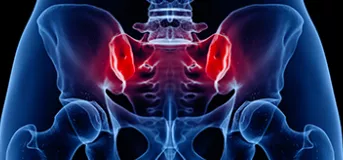
The sacroiliac joints, or SI joints, are two joints that connect the lower end of the spine (sacrum) to the pelvis on both sides. They act like shock absorbers and help transfer the weight of the upper body to the legs. When these joints move too much, too little or get inflamed, it causes pain known as sacroiliac joint dysfunction. Studies suggest that the SI joint may be the source of pain in about 15 to 30 percent of people with long standing lower back pain.
SI joint pain is often felt low down in the back, on one side near the buttock, and is easily confused with a slipped disc or sciatica. Because of this, many patients go through different treatments without getting relief. It is more common in women, especially during or after pregnancy, and in people who have had earlier lower back surgery. At SpineArc, Dr. Tanmay Avhad uses careful examination and image-guided SI joint blocks to confirm whether the SI joint is the true source of your pain, and then treats it with precise, minimally invasive care.
SI joint pain usually affects one side but can be felt on both. Common symptoms include:


SI joint dysfunction happens when the joint becomes too loose, too stiff or inflamed. Some of the most common causes are:
To treat SI joint pain the right way, it must first be confirmed that the SI joint is the real pain source. At SpineArc, diagnosis and treatment follow a step by step approach:
Some people are more likely to get SI joint dysfunction. Knowing these factors can help you take early care:
Hormonal changes and extra weight put stress on the SI joints.
Spine fusion can increase the load on the SI joints.
Falls on the buttocks and accidents can damage the joint.
Leg length difference or hip and foot problems strain one side of the pelvis.
Wear and tear or inflammatory arthritis can affect the SI joints.
Get the right diagnosis and advanced sacroiliac joint pain treatment in Mumbai from Dr. Tanmay Avhad at 4 hospitals across the city. Available 6 days a week, book your consultation today.
Everything you need to know about sacroiliac joint pain treatment in Mumbai, answered simply by Dr. Tanmay Avhad.
It is pain that comes from the SI joints, which connect the lower spine to the pelvis. It happens when these joints get inflamed, worn out, too loose or too stiff.
SI joint pain is usually felt low in the back and buttock and rarely goes below the knee. Sciatica comes from a pressed nerve and often travels down the leg to the foot with tingling or numbness.
It is diagnosed with special physical tests, imaging and an image-guided SI joint injection. If the pain reduces after the injection, it confirms the SI joint is the source.
Yes. Most patients improve with medicines, physiotherapy, SI joint injections and radiofrequency ablation. Surgery is needed only in rare cases.
Yes. During pregnancy, hormones loosen the ligaments around the pelvis and the extra weight adds strain, which can cause SI joint pain during or after pregnancy.
You can call +91 79779 26003 or +91 99203 97922, send a WhatsApp message, or fill the form on this website. Our team will call you to confirm your time and hospital.
Dr. Tanmay consults at 6 hospitals in Mumbai:
SpineArc is the spine practice of
Dr. Tanmay Avhad, a Gold Medalist Orthopaedic Spine Surgeon in Mumbai. The practice focuses on advanced, precise and minimally invasive spine care, from image-guided pain procedures to uniportal full endoscopic spine surgery, with the right treatment chosen for every patient.
Designed & Developed by DigiScrub
© SpineArc 2026 | All Rights Reserved