
Menu
Close
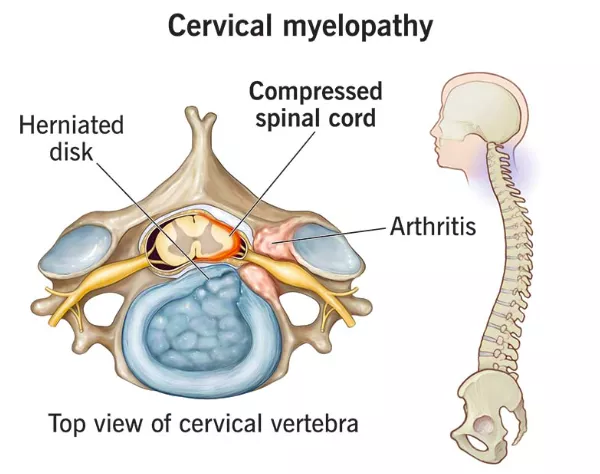
Cervical myelopathy is a condition where the spinal cord in the neck gets pressed. The spinal cord carries messages from the brain to the arms, legs and body, so when it is squeezed, these messages slow down. This can cause clumsy hands, loss of grip, numbness and difficulty in walking. The most common type is degenerative cervical myelopathy, which happens due to age related wear and tear of the neck. It is one of the most common causes of spinal cord problems in adults, especially after the age of 50.
Cervical myelopathy usually starts slowly, and early signs like dropping things, trouble buttoning a shirt or feeling unsteady while walking are often ignored as signs of ageing. But the condition can get worse over time, and nerve damage that has already happened may not fully recover. This is why early diagnosis matters. At SpineArc, Dr. Tanmay Avhad carefully checks the level of spinal cord pressure and plans the right treatment, including minimally invasive and endoscopic decompression in suitable patients, to protect nerve function and help patients stay independent.
The symptoms of cervical myelopathy often start mild and slowly increase. Common symptoms include:


Cervical myelopathy happens when something reduces the space for the spinal cord in the neck. Some of the most common causes are:
To treat cervical myelopathy the right way, the level and amount of spinal cord pressure must be found first. At SpineArc, diagnosis and treatment follow a step by step approach:
Some people are more likely to get cervical myelopathy. Knowing these factors can help you take early care:
Neck wear and tear increases after the age of 50.
People born with a narrow canal have less space for the spinal cord.
Hardening of a ligament in the neck, which is seen more often in Asian populations.
Carrying heavy loads on the head or jobs with constant neck bending.
Old injuries and smoking can speed up neck degeneration.
Get the right diagnosis and advanced cervical myelopathy treatment in Mumbai from Dr. Tanmay Avhad at 4 hospitals across the city. Available 6 days a week, book your consultation today.
Everything you need to know about cervical myelopathy treatment in Mumbai, answered simply by Dr. Tanmay Avhad.
It is a condition where the spinal cord in the neck gets pressed due to wear and tear, disc problems or thickened ligaments. It can affect hand function, balance and walking.
Early signs include clumsy hands, trouble with buttons or writing, dropping things, numbness in the hands and feeling unsteady while walking.
Yes. It can slowly get worse over time, and nerve damage that has already happened may not fully recover. Early diagnosis and timely treatment help protect nerve function.
Not always. Very mild cases can be monitored closely. But if symptoms are moderate or getting worse, surgery is usually advised to stop further damage.
In suitable patients, endoscopic or minimally invasive decompression can relieve pressure on the spinal cord through a small cut. The right option depends on the number of levels involved and the neck alignment.
You can call +91 79779 26003 or +91 99203 97922, send a WhatsApp message, or fill the form on this website. Our team will call you to confirm your time and hospital.
Dr. Tanmay consults at 6 hospitals in Mumbai:
SpineArc is the spine practice of
Dr. Tanmay Avhad, a Gold Medalist Orthopaedic Spine Surgeon in Mumbai. The practice focuses on advanced, precise and minimally invasive spine care, from image-guided pain procedures to uniportal full endoscopic spine surgery, with the right treatment chosen for every patient.
Designed & Developed by DigiScrub
© SpineArc 2026 | All Rights Reserved