Menu
Close
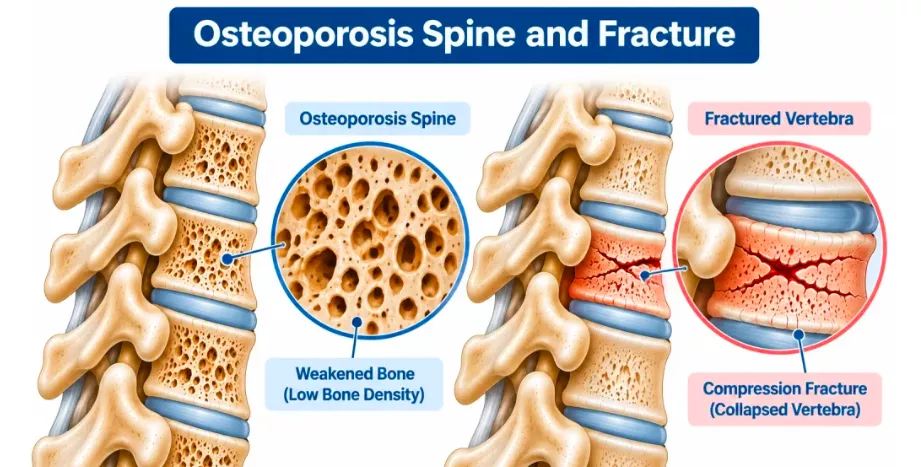
Osteoporosis is a condition where the bones become thin, weak and easy to break. It is often called a “silent disease” because there are no symptoms until a bone breaks. The spine is one of the most common places for osteoporosis related fractures. Worldwide, about 1 in 3 women and 1 in 5 men over the age of 50 will have a fracture due to osteoporosis in their lifetime. In the spine, weak bones can crack or collapse even with a small fall, lifting a bucket, bending forward or sometimes just a strong cough. This is called an osteoporotic spine fracture or vertebral compression fracture.
Many people, especially elderly women in Mumbai, accept sudden back pain, loss of height or a bent posture as normal ageing. But these can be signs of spine fractures from osteoporosis, and one fracture raises the risk of the next. At SpineArc, Dr. Tanmay Avhad diagnoses and treats osteoporotic spine fractures with the right plan for each patient, from pain control and bracing to minimally invasive fixation when needed, and works with the patient’s physician to strengthen the bones and prevent future fractures.
Osteoporosis itself has no symptoms until a fracture happens. Common signs of an osteoporotic spine fracture include:


Osteoporosis happens when the body loses bone faster than it can build new bone. Common causes and triggers include:
To treat osteoporotic spine problems the right way, both the fracture and the bone weakness must be assessed. At SpineArc, diagnosis and treatment follow a step by step approach:
Some people are more likely to get osteoporosis and spine fractures. Knowing these factors can help you take early care:
Women after menopause and anyone above 60 are at higher risk.
A parent with osteoporosis or hip fracture raises your risk.
Low calcium, low vitamin D and a thin body frame weaken bones.
Steroid medicines taken for months can thin the bones.
These habits speed up bone loss.
Get the right diagnosis and advanced osteoporotic spine treatment in Mumbai from Dr. Tanmay Avhad at 4 hospitals across the city. Available 6 days a week, book your consultation today.
Everything you need to know about osteoporosis and osteoporotic spine treatment in Mumbai, answered simply by Dr. Tanmay Avhad.
It is a crack or collapse of a spine bone that happens because the bone has become weak due to osteoporosis. It can happen with a small fall, lifting or even coughing.
Osteoporosis usually has no symptoms until a fracture happens. A bone density test (DEXA scan) is the best way to check your bone strength, especially for women after menopause and people above 60.
Yes. Most stable fractures heal with pain medicines, a brace, rest and bone strengthening treatment. Surgery is needed only for unstable fractures, severe collapse or nerve pressure.
Loss of height, especially along with a bent upper back, can be a sign of small spine fractures due to osteoporosis. You should get it checked by a spine specialist.
Take enough calcium and vitamin D, stay active with safe exercises, avoid smoking, prevent falls at home and take osteoporosis medicines if your doctor advises them.
You can call +91 79779 26003 or +91 99203 97922, send a WhatsApp message, or fill the form on this website. Our team will call you to confirm your time and hospital.
Dr. Tanmay consults at 6 hospitals in Mumbai:
SpineArc is the spine practice of
Dr. Tanmay Avhad, a Gold Medalist Orthopaedic Spine Surgeon in Mumbai. The practice focuses on advanced, precise and minimally invasive spine care, from image-guided pain procedures to uniportal full endoscopic spine surgery, with the right treatment chosen for every patient.
Designed & Developed by DigiScrub
© SpineArc 2026 | All Rights Reserved