
Menu
Close
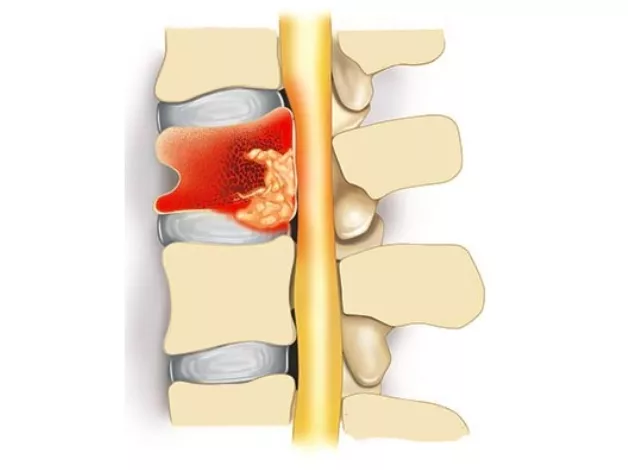
Spinal infection is an infection of the spine bones, discs or the space around the spinal cord. It can be caused by bacteria, TB germs or, rarely, fungi. In India, the most common type is spinal tuberculosis, also known as Koch’s spine or Pott’s spine. India carries the highest TB burden in the world, and the spine is the most common site of bone TB, making up about half of all bone and joint TB cases. Other spinal infections can happen after an infection elsewhere in the body, after spine surgery or injections, or in people with low immunity.
Spinal infections often start slowly with back pain, fever and weight loss, and are easily mistaken for regular back pain. If not treated in time, the infection can damage the spine bones, cause a hump or collapse, and press on the spinal cord, leading to weakness or even paralysis. Dr. Tanmay Avhad has a strong clinical and research interest in spinal TB. He has published and presented work on drug resistant spinal TB, CT guided biopsy for diagnosing Koch’s spine, and cost effective fixation for spinal TB with paralysis. At SpineArc, he focuses on early and accurate diagnosis, the right medicines and timely surgery when needed.
The symptoms of spinal infection may start slowly and increase over weeks. Common symptoms include:


Spinal infections happen when germs reach the spine through the blood or directly. Some of the most common causes are:
To treat spinal infection the right way, the exact germ, the damage to the spine and the nerve involvement must be found. At SpineArc, diagnosis and treatment follow a step by step approach:
Some people are more likely to get spinal infections. Knowing these factors can help you take early care:
Living with or near someone who has TB, or a past history of TB.
Office work and long driving put steady pressure on the lower back and nerves.
Weak nutrition lowers the body's ability to fight infection.
Spine surgery or injections can rarely lead to infection.
Stopping TB medicines early increases the risk of drug resistant TB.
Get the right diagnosis and advanced spinal infection and spinal TB treatment in Mumbai from Dr. Tanmay Avhad at 4 hospitals across the city. Available 6 days a week, book your consultation today.
Everything you need to know about spinal infection and spinal TB treatment in Mumbai, answered simply by Dr. Tanmay Avhad.
Spinal TB, also called Koch’s spine or Pott’s spine, is a tuberculosis infection of the spine bones and discs. It can cause back pain, fever, weight loss and, if untreated, deformity or paralysis.
Yes. Spinal TB can be cured with a full course of anti TB medicines, usually taken for many months. Some patients also need surgery. Completing the full course is very important.
A biopsy confirms whether the infection is TB, bacterial or something else, and tests if the germs are resistant to medicines. This helps choose the right treatment from the start.
Surgery is needed if there is weakness or paralysis, a large pus collection, severe bone damage, spine instability, deformity, or if the infection does not improve with medicines.
Spinal TB on its own usually does not spread from person to person. But if the patient also has TB in the lungs, it can spread through coughing, so a chest check is important.
You can call +91 79779 26003 or +91 99203 97922, send a WhatsApp message, or fill the form on this website. Our team will call you to confirm your time and hospital.
Dr. Tanmay consults at 6 hospitals in Mumbai:
SpineArc is the spine practice of
Dr. Tanmay Avhad, a Gold Medalist Orthopaedic Spine Surgeon in Mumbai. The practice focuses on advanced, precise and minimally invasive spine care, from image-guided pain procedures to uniportal full endoscopic spine surgery, with the right treatment chosen for every patient.
Designed & Developed by DigiScrub
© SpineArc 2026 | All Rights Reserved