Menu
Close
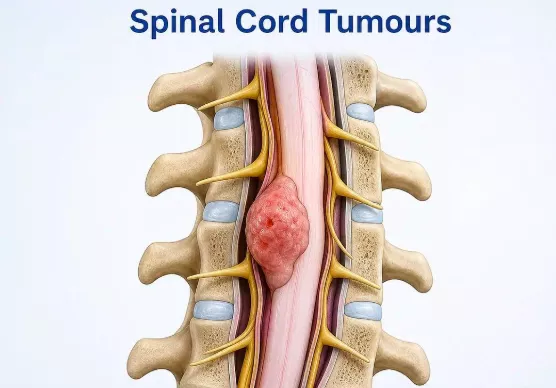
A spinal tumour is an abnormal growth in or around the spine. It can grow in the spine bones, inside the spinal canal, or on the spinal cord and nerves. Some spinal tumours are benign (non cancerous) and grow slowly, while others are malignant (cancerous). The most common type seen in the spine is metastatic disease, where cancer from another part of the body, like the breast, lung, prostate, kidney or thyroid, spreads to the spine. Spinal tumours can also start in the spine itself, like myeloma, haemangioma or nerve sheath tumours.
Spinal tumours can weaken the spine bones, cause fractures and press on the spinal cord or nerves, leading to pain, weakness or paralysis. Early diagnosis and timely treatment can help control pain, protect nerve function and keep patients walking and independent. At SpineArc, Dr. Tanmay Avhad evaluates and treats spinal tumours and metastatic disease, working closely with oncologists and radiation specialists. Where possible, he uses minimally invasive techniques to stabilise the spine and relieve nerve pressure, so patients can recover faster and continue their cancer treatment without long delays.
The symptoms of spinal tumours depend on the location, size and type of tumour. Common symptoms include:


Spinal tumours can have different causes, and in many cases the exact reason is not known. Common types and causes include:
To treat a spinal tumour the right way, the type of tumour, its spread, spine stability and nerve involvement must be carefully assessed. At SpineArc, diagnosis and treatment follow a step by step approach:
Some people are more likely to develop spinal tumours. Knowing these factors can help you take early care:
People with breast, lung, prostate, kidney or thyroid cancer have a higher chance of spread to the spine.
Metastatic spine disease and myeloma are more common after the age of 50.
Neurofibromatosis and some other inherited conditions increase the risk of nerve tumours.
Weak immunity can increase the risk of some types of lymphoma.
Earlier radiation to the area may slightly raise the risk.
Get the right diagnosis and advanced spinal tumour treatment in Mumbai from Dr. Tanmay Avhad at 4 hospitals across the city. Available 6 days a week, book your consultation today.
Everything you need to know about spinal tumour treatment in Mumbai, answered simply by Dr. Tanmay Avhad.
No. Some spinal tumours are benign and grow slowly. But the most common spine tumours in adults are cancers that have spread from other organs, so every spinal tumour needs proper testing.
Constant back pain that is worse at night, pain that does not improve with rest, unexplained weight loss, and weakness or numbness in the arms or legs are warning signs.
It is diagnosed with MRI and CT scans, blood tests and a CT guided biopsy, which confirms the exact type of tumour and helps plan treatment.
No. Many spinal tumours are treated with radiotherapy, chemotherapy or careful monitoring. Surgery is advised when the spine is unstable, there is pressure on the spinal cord or nerves, or pain is not controlled.
Yes, in suitable patients. Minimally invasive screw fixation can stabilise the spine through small cuts, with less blood loss and faster recovery, so cancer treatment like radiotherapy can start sooner.
You can call +91 79779 26003 or +91 99203 97922, send a WhatsApp message, or fill the form on this website. Our team will call you to confirm your time and hospital.
Dr. Tanmay consults at 6 hospitals in Mumbai:
SpineArc is the spine practice of
Dr. Tanmay Avhad, a Gold Medalist Orthopaedic Spine Surgeon in Mumbai. The practice focuses on advanced, precise and minimally invasive spine care, from image-guided pain procedures to uniportal full endoscopic spine surgery, with the right treatment chosen for every patient.
Designed & Developed by DigiScrub
© SpineArc 2026 | All Rights Reserved